
Language
Book Consultation
0327 – 3385218
55-C iHealth, Phase-II DHA, Karachi
At Pakistan Clinicem, classical Greco-Arab texts are weighed against current pharmacological literature before every prescribing decision — an evidence-informed clinical approach we are working to grow into formal, published research over time.
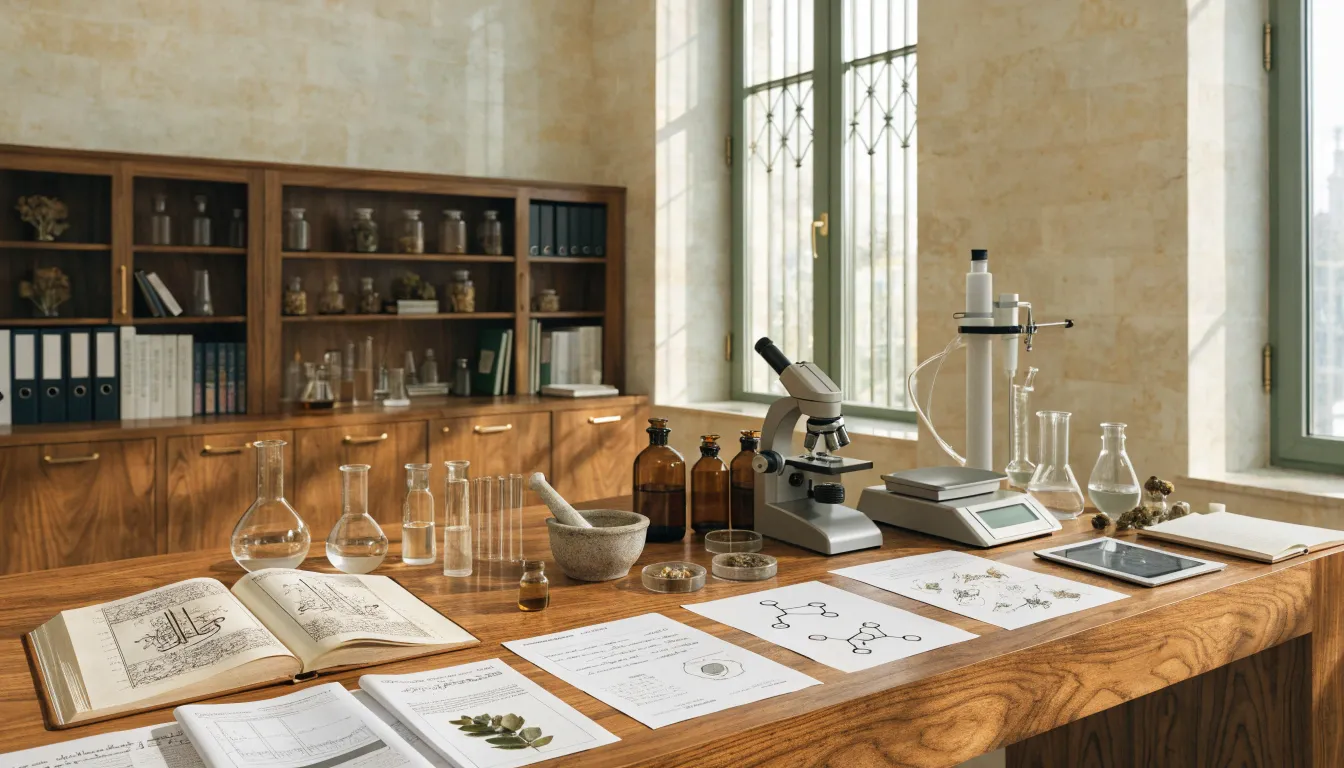
In Pakistan, "Eastern Medicine" is the formally recognised term for Greco-Arab Medicine — the clinical tradition of Ibn Sina and Al-Razi, distinct in lineage and methodology from other traditional systems such as Traditional Chinese Medicine or Ayurveda, and standardised nationally through the BEMS (Bachelor of Eastern Medicine & Surgery) programme. At Pakistan Clinicem, we honor this specific legacy while weighing it against current pharmacological and clinical literature — an evidence-informed standard we apply today, and a foundation we intend to grow into formal, published clinical research as our practice matures.
Before any formulation reaches a patient, it is weighed against classical Qarabadeen (Formulary) precedent and current, published pharmacology and phytotherapy literature. We are not yet running registered clinical trials — that is a capability we intend to build toward — but every prescribing decision today is disciplined, literature-referenced, and individualized rather than routine.


Constitutional assessment (Mizaj, Akhlat) is deliberately cross-checked against modern pathophysiology for every patient — combining hands-on clinical experience with ongoing study of current medical literature. As the practice grows, we intend to formalize this into structured collaboration with external researchers and academic partners.
Every prescription is screened against current pharmacological and toxicological literature for contraindications, herb-drug interactions, and dosage appropriateness, alongside classical dosing precedent. Formal, published validation studies of individual formulations are a longer-term goal — today, this literature-based safety review is applied consistently, before a single formulation reaches a patient.


Classical diagnostic frameworks are never applied in isolation — each is deliberately read alongside contemporary pathophysiology, so the two perspectives inform, rather than compete with, one another. This correlation is the foundation on which we hope to eventually build broader integration with mainstream healthcare research.
Whatever form our research work takes — today's literature-grounded prescribing, or tomorrow's formal studies — the purpose stays the same: improving patient outcomes. Every constitutional assessment, formulation choice, and follow-up visit is designed to be safe, individually relevant, and clinically sound for the patient in front of us.

Some of the following are already part of daily practice at Pakistan Clinicem; others are capabilities we are working to build as the practice grows. Each is labelled accordingly.
Not a clinical-trials pipeline — this is the structured, literature-informed process behind every individual patient's care plan today.